歡(huan)迎(ying)來(lai)到濱州(zhou)恒(heng)通電(dian)力(li)器(qi)材有限公司(si)網(wang)站,我們竭誠為(wei)您(nin)服務(wu)

咨詢熱(re)線(xian):400-879-6696
咨詢熱(re)線(xian):183-6493-6808

 濱州(zhou)恒(heng)通電(dian)力(li)器(qi)材有限公司(si)
聯系電(dian)話(hua):400-879-6696
服(fu)務(wu)熱(re)線(xian):183-6493-6808
聯系地(di)址(zhi):山東省濱(bin)州(zhou)市(shi)無(wu)棣(di)縣海(hai)豐(feng)街道前橋村(cun)112號(hao)
PE管道由(you)於(yu)其施工(gong)方(fang)便、工(gong)程(cheng)造(zao)價(jia)比(bi)用鋼管低(DN300以(yi)下(xia))、不(bu)存(cun)在(zai)腐(fu)蝕(shi)泄(xie)露問(wen)題(ti)、對(dui)輸送物(wu)質汙(wu)染小等優點(dian),近年(nian)來(lai)在城(cheng)市埋(mai)地(di)燃(ran)氣輸送管網(wang)建(jian)設(she)中被(bei)廣(guang)泛應(ying)用。PE管道雖(sui)然(ran)有(you)很多優點(dian),但(dan)強度(du)低是(shi)其的弱點(dian),在(zai)以(yi)往(wang)市政建設(she)施(shi)工(gong)中,由(you)於(yu)管道的(de)確切(qie)位置不(bu)十(shi)分(fen)清楚,被(bei)施(shi)工(gong)機械(xie)挖斷、挖漏的現象很常見,而由(you)此(ci)造(zao)成的燃(ran)氣爆(bao)炸事(shi)故也時(shi)有(you)發生(sheng);此(ci)外(wai),由(you)於(yu)非開挖(wa)技術的(de)應用,產生(sheng)了各(ge)種類(lei)型(xing)的(de)深(shen)埋(mai)管線(xian),這(zhe)就更(geng)加深(shen)了探(tan)測(ce)管線(xian)的難(nan)度。
PE pipelines have been widely used in the construction of urban buried gas transmission networks in recent years due to their advantages such as easy construction, lower engineering cost compared to steel pipes (below DN300), no corrosion and leakage problems, and low pollution to transported materials. Although PE pipelines have many advantages, their biggest weakness is their low strength. In previous municipal construction, the exact location of the pipeline was not very clear, and it was common for construction machinery to cut and leak, resulting in gas explosion accidents from time to time; In addition, due to the application of non excavation technology, various types of deep buried pipelines have emerged, which further increases the difficulty of detecting pipelines.
目(mu)前埋(mai)地(di)PE燃(ran)氣管道埋(mai)入地(di)下(xia)時(shi),為(wei)了(le)以(yi)後(hou)不(bu)用開挖(wa)探(tan)測(ce)定位PE管道的(de)位置和(he)埋(mai)深,按照《城(cheng)鎮(zhen)燃(ran)氣設(she)計(ji)規範》GB50028—2006和(he)《城鎮(zhen)燃(ran)氣輸配(pei)工(gong)程(cheng)施(shi)工(gong)及驗收(shou)規(gui)範》CJJ33-2005要(yao)求(qiu),需(xu)要(yao)隨(sui)同埋(mai)地(di)PE管道壹(yi)起鋪(pu)設(she)壹(yi)條(tiao)金(jin)屬(shu)導線(xian)——即示(shi)蹤線(xian)。示蹤線(xian)是(shi)金(jin)屬(shu)絲經防(fang)腐(fu)處(chu)理後經(jing)過編織(zhi)工(gong)藝成壹種能導電(dian)的(de)金(jin)屬(shu)線(xian),壹般(ban)用於埋(mai)設(she)較(jiao)深的場合(he),緊貼(tie)管材敷設(she),將(jiang)示蹤線(xian)的壹(yi)頭(tou)接(jie)上脈(mai)沖信號(hao)就能在(zai)地(di)面(mian)上遙測(ce)到信號(hao),可確定(ding)管道的(de)空間位置和(he)深度(du)及走向(xiang)。
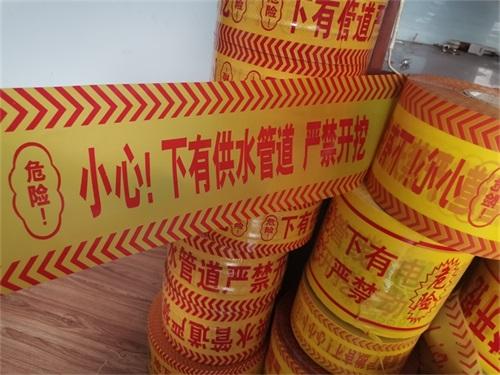
At present, when buried PE gas pipelines are buried underground, in order to avoid excavation detection and locate the position and depth of the PE pipeline in the future, according to the requirements of the "Urban Gas Design Code" GB50028-2006 and the "Construction and Acceptance Code for Urban Gas Transmission and Distribution Engineering" CJJ33-2005, a metal wire, namely a tracer line, needs to be laid together with the buried PE pipeline. Tracer wire is a type of conductive metal wire woven from anti-corrosion treatment of metal wire. It is generally used in deep buried situations, closely attached to the pipe for laying. By connecting one end of the tracer wire to a pulse signal, the signal can be telemetry on the ground to determine the spatial position, depth, and direction of the pipeline.
壹般(ban)情況下(xia)示(shi)蹤線(xian)敷設(she)在(zai)管道外(wai)面(mian),但(dan)在非開挖(wa)施工(gong)敷設(she)PE管道時(shi)(定(ding)向鉆穿越施(shi)工(gong)),管道外(wai)面(mian)的示(shi)蹤線(xian)大多數情(qing)況下(xia)會(hui)被(bei)拉(la)斷,不(bu)能(neng)夠(gou)再(zai)用於施(shi)加信號(hao)探(tan)測(ce)管道的(de)位置和(he)埋(mai)深,而失(shi)去示蹤線(xian)作用。
In general, the tracer line is laid outside the pipeline, but during non excavation construction of PE pipelines (directional drilling crossing construction), the tracer line outside the pipeline is mostly pulled and cannot be used to apply signals to detect the position and depth of the pipeline, thus losing its function as a tracer line.
現有(you)技術中,埋(mai)地(di)PE管道內部金屬(shu)示蹤線(xian)的引(yin)出,主要使(shi)用管道的(de)鋼塑(su)轉換(huan)接(jie)頭(tou),沒(mei)有(you)設(she)計(ji)鋼塑(su)轉換(huan)接(jie)頭(tou)的位置還(hai)不(bu)能(neng)夠(gou)引(yin)出(chu)金屬(shu)示蹤線(xian),造成埋(mai)地(di)PE管道示(shi)蹤線(xian)出現(xian)斷點(dian)、不(bu)完整等(deng)現(xian)象,給後面(mian)的管道探(tan)測(ce)與(yu)定位帶來(lai)難題(ti)。
In the existing technology, the introduction of metal tracing lines inside buried PE pipelines mainly uses steel plastic conversion joints of the pipeline. Without the design of steel plastic conversion joints, it is not possible to introduce metal tracing lines, resulting in phenomena such as breakpoints and incompleteness of the tracing lines in buried PE pipelines, which poses difficulties for pipeline detection and positioning in the future.
 公司(si)地(di)址(zhi):山東省濱(bin)州(zhou)市(shi)無(wu)棣(di)縣海(hai)豐(feng)街道前橋村(cun)112號(hao)
 濱州(zhou)恒(heng)通電(dian)力(li)器(qi)材有限公司(si)
  備(bei)案(an)號(hao):魯ICP備(bei)2022018583號(hao)-1
魯公(gong)網(wang)安(an)備 37162302000525號(hao)
備(bei)案(an)號(hao):魯ICP備(bei)2022018583號(hao)-1
魯公(gong)網(wang)安(an)備 37162302000525號(hao)

截(jie)屏(ping),微信識別二維碼(ma)

 TEL:400-879-6696
  FAX:183-6493-6808
 MAI:
MAI: